The Lagos State Government has revealed plans to bring back the monthly environmental sanitation exercise, almost ten years after the programme was halted in the state.
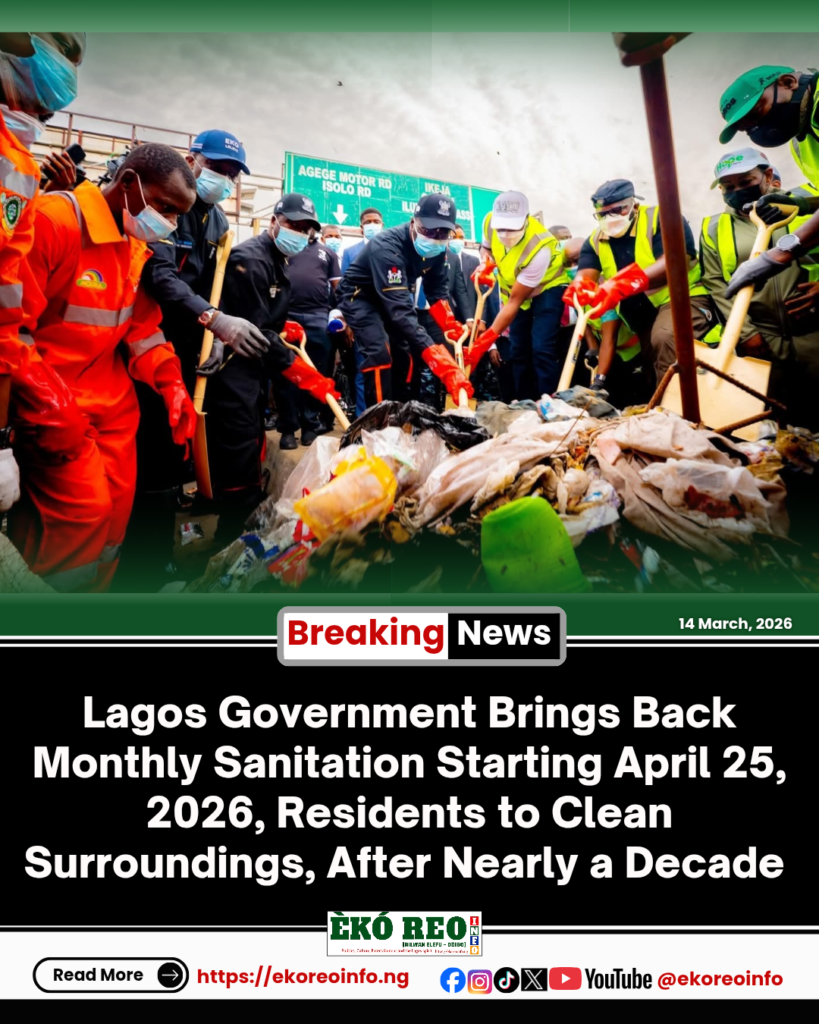
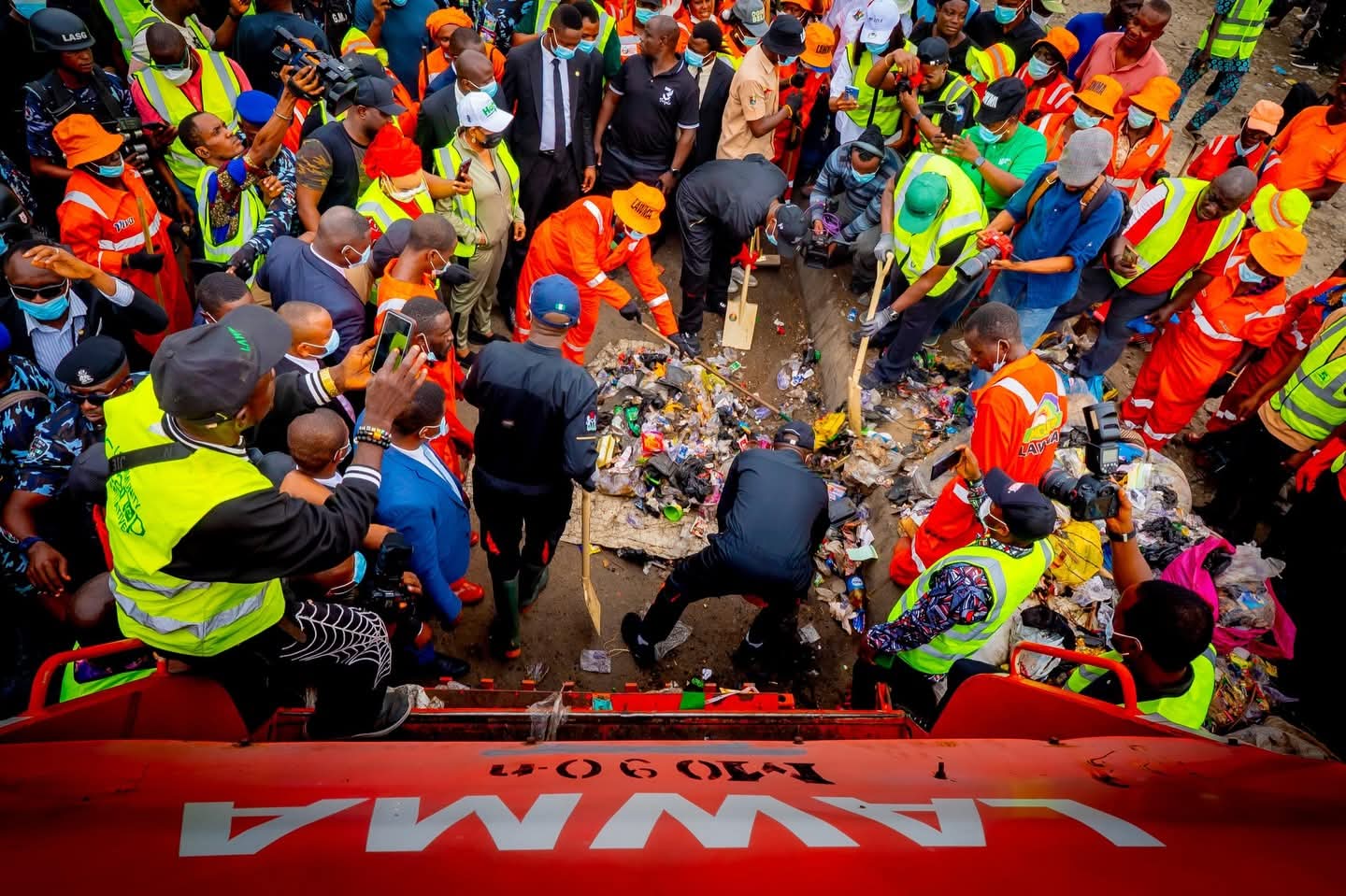
The initiative will require residents to tidy up their surroundings, clear gutters and drainage in front of their homes, and dispose of refuse properly as part of renewed efforts to strengthen environmental hygiene and address waste management problems across the state.
The announcement was made on Saturday by the Commissioner for Environment and Water Resources, Tokunbo Wahab, who confirmed in a statement that the exercise would return later this year.
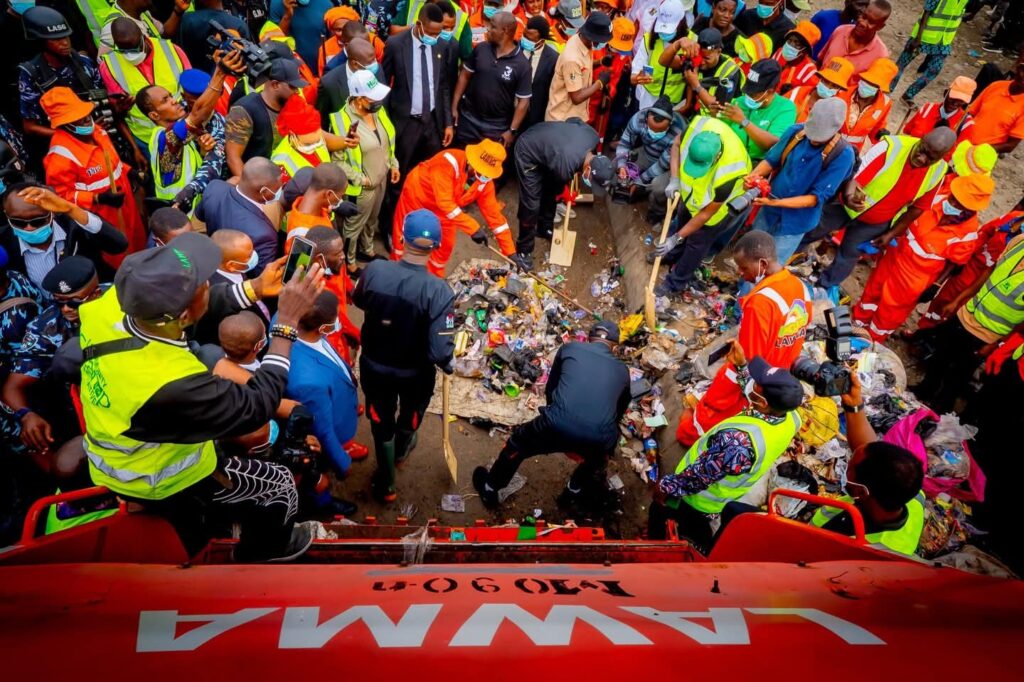
According to him, the sanitation programme will officially restart on Saturday, April 25, 2026, and will be observed on the last Saturday of every month between 6:30 a.m. and 8:30 a.m.
He explained that during this period, Lagos residents are expected to participate actively by cleaning their neighbourhoods, removing debris from drainage channels, and ensuring proper waste disposal as part of their civic responsibility.
Wahab emphasised that maintaining a clean environment should be seen as a shared duty among residents, noting that the state government will strictly enforce compliance once the programme resumes.
He described the move as an important step toward creating a cleaner and healthier city while also reducing the risk of flooding.
The commissioner also noted that the reintroduction of the sanitation exercise is aimed at reviving a long-standing culture of cleanliness that used to be common among residents of the state before it was discontinued.
He explained that before 2016, Lagosians regularly dedicated time each month to clean their homes and communities, a practice that helped keep the environment orderly and healthy.
However, he said the suspension of the exercise over the years has contributed to rising environmental challenges, including waste disposal issues and blocked drainage systems in several areas.
Wahab disclosed that discussions about bringing the programme back had been ongoing for more than a year before the government finally decided to reintroduce it.
He therefore appealed to residents to support the initiative by setting aside a small amount of time each month to participate in the sanitation exercise.
The commissioner pointed out that similar cleaning activities are already carried out weekly in markets across the state, usually on Thursdays, adding that the government now wants the entire state to observe a collective sanitation period once every month.
The monthly environmental sanitation exercise used to hold on the last Saturday of every month from 7 a.m. to 10 a.m. before it was discontinued in November 2016 following a court ruling that restricted the enforcement of movement during the exercise.
Since the suspension, concerns over waste management have grown in parts of Lagos, with issues such as blocked drainage channels and indiscriminate dumping of refuse becoming increasingly common.
_________