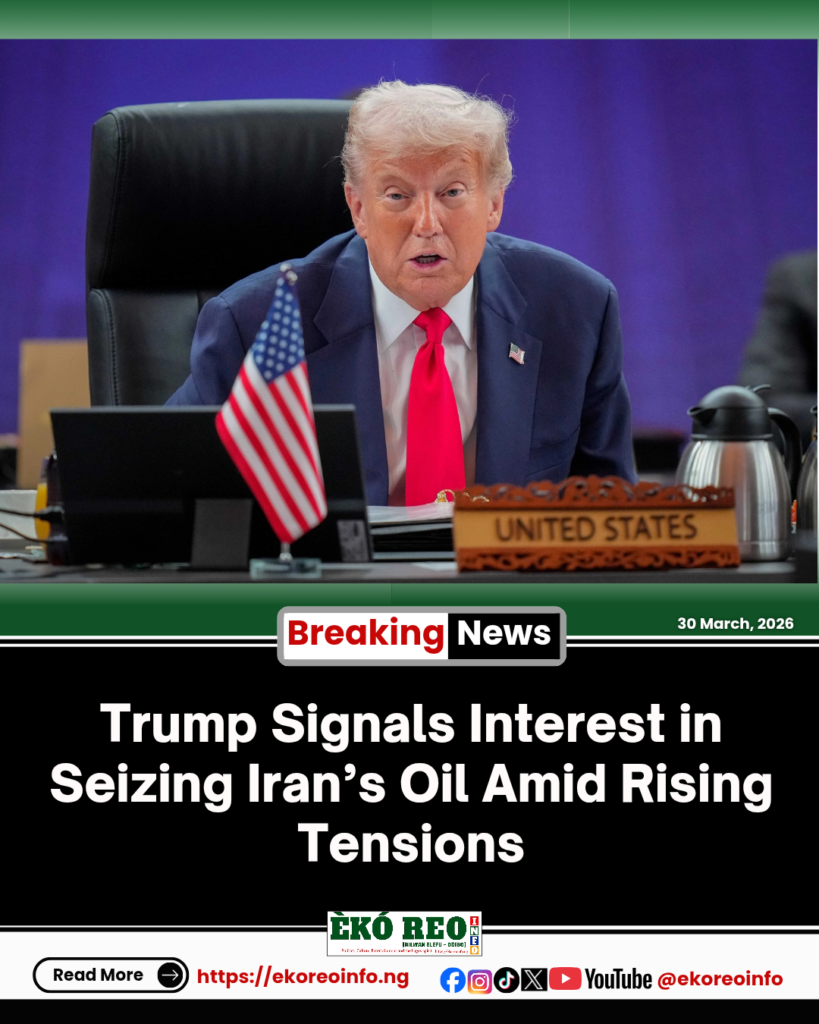
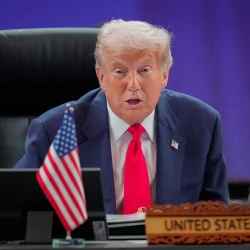
Amid escalating tensions in the Middle East, former U.S. President Donald Trump has indicated that gaining control of Iran’s oil resources would be his preferred course of action, as hostilities between Iran, Israel, and the United States continue to intensify.
Iran remains a key player in global energy markets as a member of OPEC, holding one of the largest crude oil reserves worldwide—ranking behind only Venezuela and Saudi Arabia. Its strategic importance is further amplified by its influence over the Strait of Hormuz, a critical maritime corridor responsible for transporting roughly one-fifth of global oil supply.
Since the outbreak of conflict last month, Iran has significantly restricted movement through the strait, effectively choking off much of the traffic and disrupting global energy flows. This has heightened tensions with Washington, with the U.S. pushing for unrestricted access while Tehran insists on maintaining control over the passage.
In a recent interview with the Financial Times, Trump made controversial remarks suggesting that seizing Iran’s oil would be a favorable outcome, even though such a move goes beyond his publicly stated military objectives. He dismissed critics of the idea, arguing that opposition within the United States lacks understanding.
Trump also floated the possibility of targeting Kharg Island, Iran’s primary oil export terminal, which is responsible for handling the overwhelming majority of the country’s crude shipments.
He suggested that capturing the island remains one of several strategic options under consideration, while acknowledging that any such move would likely require a sustained U.S. presence.
Kharg Island plays a central role in Iran’s oil infrastructure, with storage capacity estimated at around 30 million barrels and accounting for approximately 90 percent of the nation’s exports.
Earlier this year, the United States also made headlines after announcing it had taken control of Venezuela’s oil sector following the capture of President Nicolás Maduro, a move Trump referenced in drawing parallels to his stance on Iran.