For centuries, Lagos Island has stood as the spiritual home of one of Africa’s most revered cultural spectacles, the Adamu Orisa Play, popularly recognized around the world as the Eyo Festival. Rooted in deep tradition and closely tied to the history of the ancient Eko kingdom, the festival is more than a colourful parade; it is a ceremonial institution that embodies honour, heritage, and communal identity.
The last time Lagos witnessed this grand cultural procession was on May 20, 2017, when it was staged in celebration of Lagos at 50. That outing marked the 68th edition of the festival, reaffirming its prestige as the most iconic cultural display within the state.
A Festival Reserved for Only the Most Significant Moments
Unlike annual carnivals such as Olowogbowo or Oko-Faji, the Eyo Festival is not a yearly occurrence. Its staging depends on weighty circumstances, usually to honour the passing of an Oba, a chief, or a distinguished Lagosian whose contributions shaped the growth of the city.
Historically, the festival’s frequency has varied significantly. Some eras saw the festival held multiple times in a single year (notably 1903, 1906 and 1909), while in other periods, Lagos went over two decades without witnessing the sacred procession.
Its rarity is part of its mystique. When Eyo appears on the streets, all of Lagos pays attention.
The Five Powerful Orisa Groups That Govern the Festival
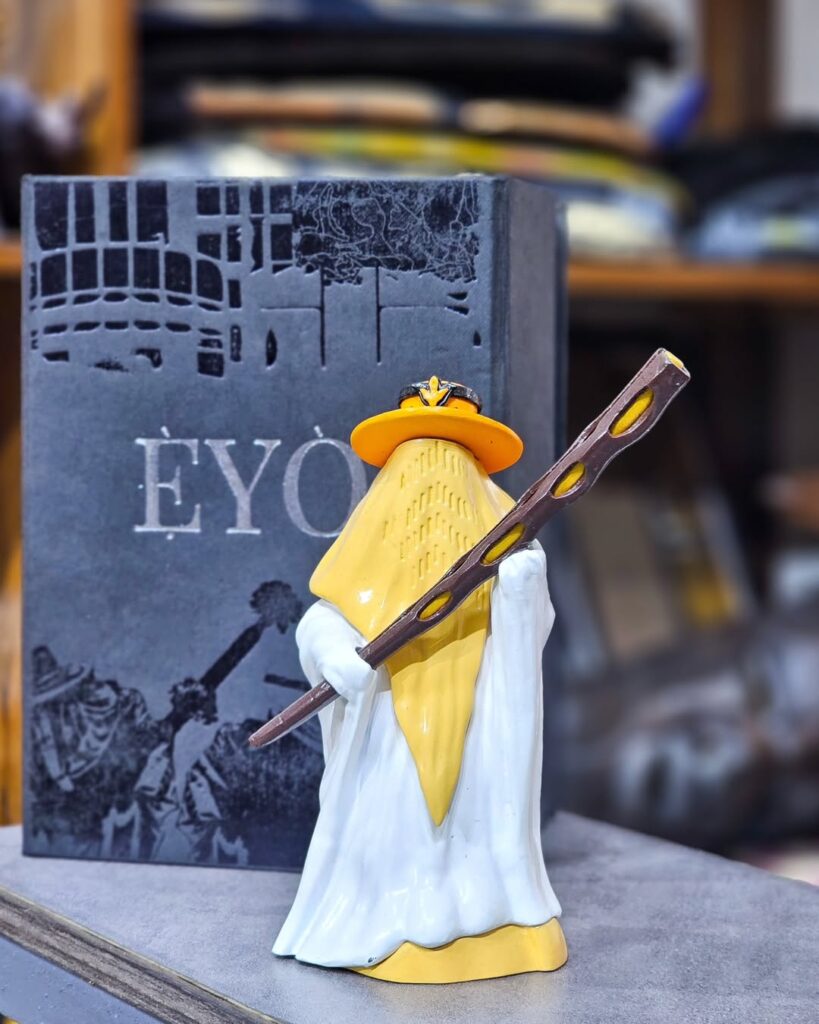
At the heart of the Adamu Orisa Play are five traditional deity groups, each playing an indispensable role in the spiritual and ceremonial structure of the festival. They include:
- Eyo Orisa Adimu: The Supreme Head
- Eyo Okanlaba (Alakete Pupa): Enforcers of Order
- Eyo Orisa Oniko: Purifiers of Evil
- Eyo Orisa Ologede: Custodians of Peace
- Eyo Orisa Angere: One of the leading traditional groups
These Orisas collectively shape the festival’s rituals, security, purification, and symbolic meaning.
Eyo Adimu: The Supreme and Oldest Orisa
Eyo Orisa Adimu (also called Orisa Baba Nla Mila) stands as the spiritual head over all other Eyo groups. Its authority is absolute during the festival, as all rituals, announcements, and ceremonial movements stem from its directives.
Membership in the Adimu cult is highly restricted. Only individuals born into the lineage or those introduced by highly respected members of society may join. Many participants from Eyo Adimu are typically eminent figures, judges, doctors, business leaders, and other notable personalities.
Okanlaba: The Disciplinarians and Protectors
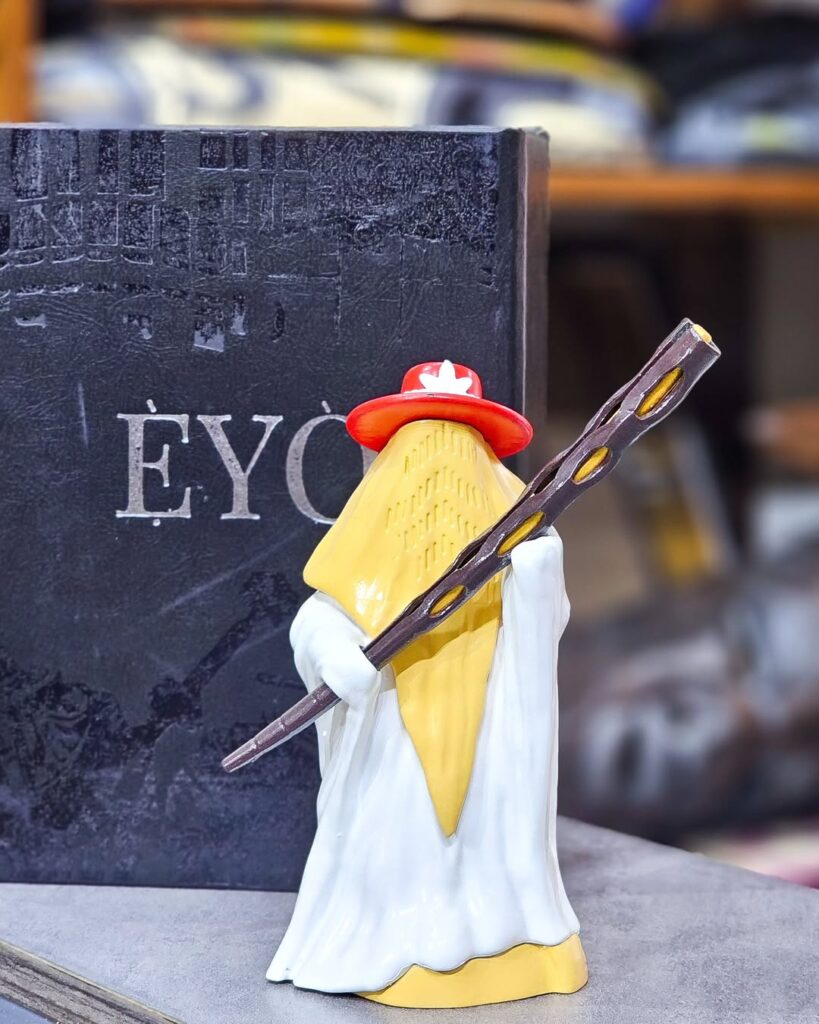
Eyo Okanlaba, easily recognized by the bright alakete pupa (red hat), serves as the festival’s equivalent of a traditional police force. Their mandate includes:
- Enforcing discipline among all Eyo groups
- Issuing warnings and maintaining strict adherence to festival rules
- Remaining in constant communication with the Awe Adimu (Adimu shrine)
Historically, Eyo Oniko was the second in rank after Adimu. However, during the reign of Oba Adele, the position was formally granted to Okanlaba, a change that has remained permanent for generations.
Another key responsibility is the construction of the Agodo, a mat-built enclosure erected along Enu-Owa (now Iga Iduganran Street) to house traditional drummers before dawn on festival day.
Orisa Oniko: The Midnight Purifier
In the dark hours before dawn on the festival morning, Eyo Orisa Oniko emerges. This outing symbolizes the spiritual cleansing of Lagos Island. With raffia-wrapped costumes and a distinctive appearance, the Oniko followers drive away evil spirits and ensure that the town is purified ahead of the rituals.
They also lead the Opa Processions, the formal announcement to the city that Adamu Orisa Play is set to hold.
Orisa Ologede: Guardians of Peace and Safety
Working in parallel with Oniko, Eyo Orisa Ologede appears at specific times in the early morning, invoking peace and safety. The group ensures that the atmosphere for the festival remains calm, spiritually balanced, and safe for both participants and spectators.
Like Oniko, Ologede also leads Opa processions from time to time.
The Ancestral Procedure Behind Staging the Festival
Staging Adamu Orisa Play is a deeply ritualistic process, governed by centuries-old customs. Any family or individual seeking to host an Eyo in their name must:
- Approach Olorogun Agan and Olorogun Igbesodi, the two foundational families of the festival.
- Receive direction to proceed to the reigning Oba of Lagos.
- Be escorted to the Awe Adimu with the Oba’s official staff and selected white-capped chiefs.
- Present the Ikaro, a combination of symbolic items and monetary offerings.
- Undergo the sealed, private approval process at the Awe Adimu shrine.
No other Orisa or Eyo family is permitted at this confidential presentation, underscoring the sacredness of the ritual.
Every Orisa group then receives its mandate from Adimu, including the important role played by Eyo Onilaba (Eyo Oba), the custodian of the Oba’s symbolic bag, Laba.
A 160-Year Legacy That Defines Lagos
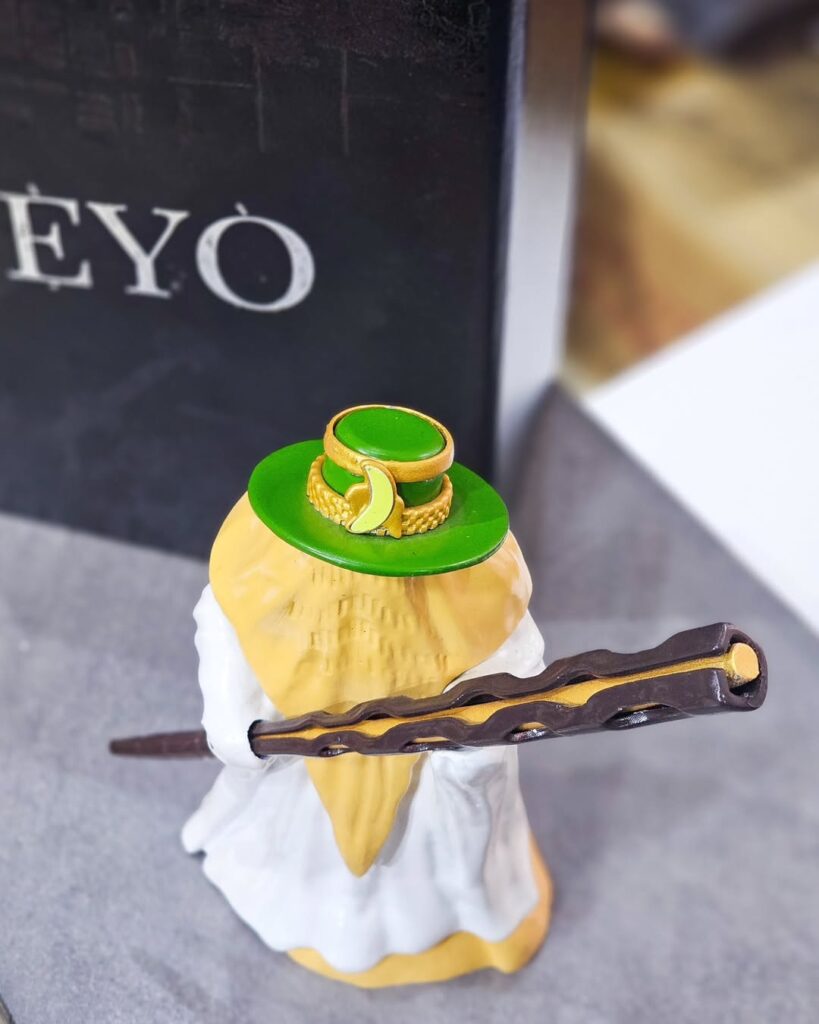
With a documented history spanning over 160 years, the Eyo Festival remains one of the strongest cultural pillars of Lagos Island. Its symbolism is synonymous with the identity of Eko, the traditions, the hierarchy, the spirituality, and the unbreakable link between the people and their ancestral heritage.
When the Eyo appear, they do not simply parade, they announce that Lagos remembers, Lagos honours, and Lagos stands united with its history.
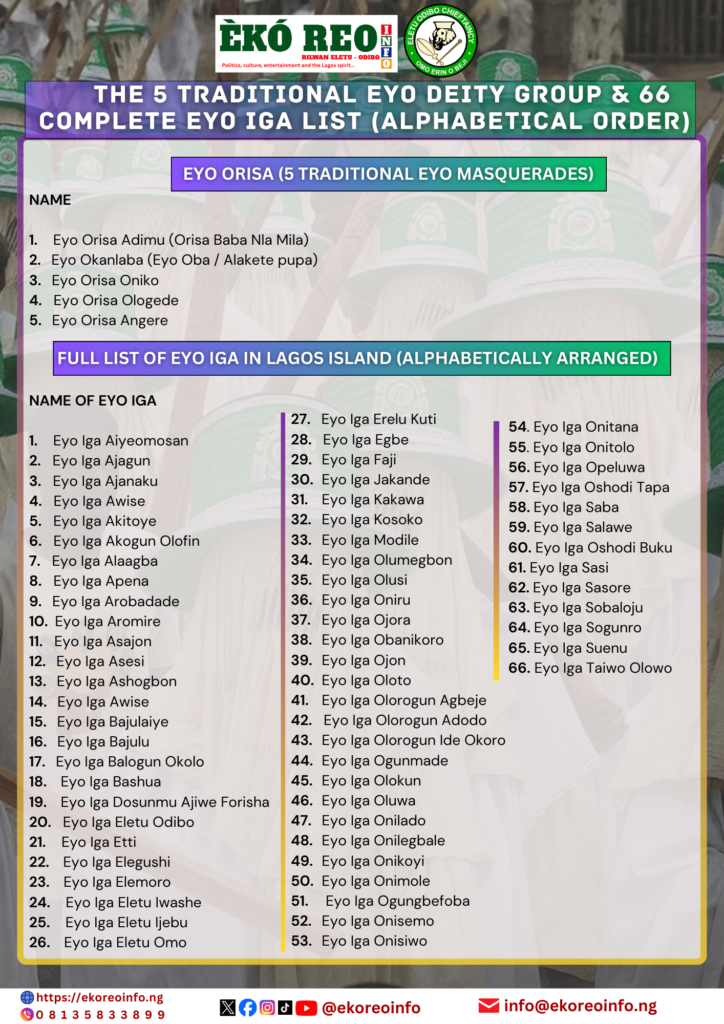
Meanwhile below is the published alphabetical list of 66 Eyo Iga, the traditional ruling houses and lineages authorized to participate in the festival.
The list includes some of Lagos’ most historically significant families such as:
FULL LIST OF EYO IGA IN LAGOS ISLAND (ALPHABETICALLY ARRANGED)
NAME OF EYO IGA
- Eyo Iga Akitoye
- Eyo Iga Ajagun
- Eyo Iga Ajanaku
- Eyo Iga Awise
- Eyo Iga Aiyeomosan
- Eyo Iga Akogun Olofin
- Eyo Iga Alaagba
- Eyo Iga Apena
- Eyo Iga Arobadade
- Eyo Iga Aromire
- Eyo Iga Asajon
- Eyo Iga Asesi
- Eyo Iga Ashogbon
- Eyo Iga Awise
- Eyo Iga Bajulaiye
- Eyo Iga Bajulu
- Eyo Iga Balogun Okolo
- Eyo Iga Bashua
- Eyo Iga Dosunmu Ajiwe Forisha
- Eyo Iga Eletu Odibo
- Eyo Iga Etti
- Eyo Iga Elegushi
- Eyo Iga Eletu Iwashe
- Eyo Iga Elemoro
- Eyo Iga Eletu Ijebu
- Eyo Iga Eletu Omo
- Eyo Iga Erelu Kuti
- Eyo Iga Egbe
- Eyo Iga Faji
- Eyo Iga Jakande
- Eyo Iga Kakawa
- Eyo Iga Kosoko
- Eyo Iga Modile
- Eyo Iga Olumegbon
- Eyo Iga Olusi
- Eyo Iga Oniru
- Eyo Iga Ojorа
- Eyo Iga Obanikoro
- Eyo Iga Ojon
- Eyo Iga Oloto
- Eyo Iga Olorogun Agbeje
- Eyo Iga Olorogun Adodo
- Eyo Iga Olorogun Ide Okoro
- Eyo Iga Ogunmade
- Eyo Iga Olokun
- Eyo Iga Oluwa
- Eyo Iga Onilado
- Eyo Iga Onilegbale
- Eyo Iga Onikoyi
- Eyo Iga Onimole
- Eyo Iga Ogungbefoba
- Eyo Iga Onisemo
- Eyo Iga Onisiwo
- Eyo Iga Onitana
- Eyo Iga Onitolo
- Eyo Iga Opeluwa
- Eyo Iga Oshodi Tapa
- Eyo Iga Oshodi Buku
- Eyo Iga Saba
- Eyo Iga Salawe
- Eyo Iga Sasi
- Eyo Iga Sasore
- Eyo Iga Sobaloju
- Eyo Iga Sogunro
- Eyo Iga Suenu
- Eyo Iga Taiwo Olowo